Thursday, January 3, 2013

RITUAL & BELIEF (South Africa)

Ndiyindoda: I Am a Man
People and Power - Al Jazeera.com, January 3, 2013
"A week before Christmas, amid increasing anxiety about the state of Nelson Mandela's health, the international media assembled in Pretoria, South Africa and began asking questions about the iconic former leader's future wellbeing. Would he ever leave hospital? Would he live to see another year? For domestic South African journalists, however, the story had another angle. In Mandela's Eastern Cape homeland, the breaking story was that his illness meant he would almost certainly miss his grandson's initiation ceremony back home in Qunu. Mandela, like many powerful political figures in South Africa, is a Xhosa. For Xhosa boys, their ceremonial transition to manhood -- a process known as Ukwaluka -- includes traditional circumcision. It is a time honoured ritual woven deep into the fabric of their society. Mandela recalled his own three months at initiation school in 1934 in his memoir A Long Walk To Freedom. 'An uncircumcised Xhosa man is a contradiction in terms,' he wrote, 'for he is not considered a man at all, but a boy. A boy will cry, but a man conceals his pain.' [n.b. Mandela's account is included in my Men of the Global South anthology.] Today's rites of passage ceremonials tend to last for three weeks rather than three months, but the core elements remain the same -- and so do the risks.

Monday, December 31, 2012

GOVERNANCE & CONFLICT (Syria)

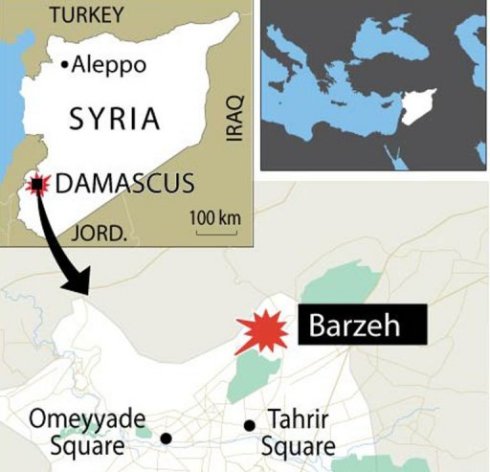
Dozens of Tortured Bodies Found in Damascus
Agence France-Presse dispatch on Yahoo! News, December 31, 2012
"Dozens of tortured bodies have been found in a flashpoint district of Damascus, a watchdog reported on Monday, in one of the worst atrocities in Syria's 21-month conflict. The report from the Syrian Observatory for Human Rights came as a gruesome video emerged on the Internet of a separate slaying of three children who had their throats slashed, also in the capital. 'Thirty bodies were found in the Barzeh district. They bore signs of torture and have so far not been identified,' said the Britain-based Observatory. The Syrian Revolution General Commission, a grassroots network of anti-regime activists, estimated there were 50 bodies, and added that 'their heads were cut and disfigured to the point that it was no longer possible to identify' them. The video posted online by activists showed the bodies of three young boys with their throats slit open and hands bound behind their backs. Their bodies were discovered on Monday in Jubar. The Observatory also reported the killing of the boys, who opposition activists said had been kidnapped the day before at a checkpoint on their way home from school. These reports could not be verified independently because of media restrictions by the Syrian authorities. Regime warplanes, meanwhile, bombarded rebel positions on the northeastern and southwestern outskirts of Damascus, leaving eight civilians dead including two children, said the Observatory. [...]"
[n.b. When you read "dozens of tortured bodies," translate as "dozens of tortured males." Can you imagine dozens of murdered females being described in this fashion?]

Sunday, December 30, 2012

GOVERNANCE & CONFLICT (Nigeria)

In Nigeria, Trapped between Islamist Radicals and Security Forces
By Sudarsan Raghavan
The Washington Post, December 30, 2012
"The armed men dragged Musa Muhammad out of his house and ordered him to lie face down on the ground. Then they grabbed his son. After asking his name, the men issued their judgment. 'I heard three gunshots -- pop, pop, pop,' Muhammad recalled, his voice trembling, his fingers in the shape of a pistol. 'My son was dead, killed in front of me.' His assailants were not the radical Islamists who have brutalized this town. They were government security forces sent to protect the residents. In the epicenter of one of Africa's most violent religious extremist movements, civilians are caught in a guerrilla conflict that has shattered families and communal relationships. The Boko Haram, a homegrown group with suspected ties to al-Qaeda, is assassinating people nearly every day, targeting Christians, soldiers, police, even astrologers as it seeks to weaken the Western-allied government and install Islamic sharia law in this nation. But the security forces have also carried out extrajudicial killings, imprisoned hundreds on flimsy grounds, looted and burned shops and houses, according to victims, local officials and human rights activists. ... 'In a guerrilla war, you need the help of the local population. But the security forces are alienating the people,' said Muhammad Abdullahi, the provincial director of religious affairs. 'They are making their jobs more difficult for themselves.'

GOVERNANCE & CONFLICT (Pakistan)

"Pakistan militants punish accused informers aiding drone attacks by taping their confessions and executions." (The New York Times)
Drone War Spurs Militants to Deadly Reprisals
By Declan Walsh
The New York Times, December 29, 2012
"They are dead men talking, and they know it. Gulping nervously, the prisoners stare into the video camera, spilling tales of intrigue, betrayal and paid espionage on behalf of the United States. Some speak in trembling voices, a glint of fear in their eyes. Others look resigned. All plead for their lives. 'I am a spy and I took part in four attacks,' said Sidinkay, a young tribesman who said he was paid $350 to help direct CIA drones to their targets in Pakistan's tribal belt. Sweat glistened on his forehead; he rocked nervously as he spoke. 'Stay away from the Americans,' he said in an imploring voice. 'Stay away from their dollars.' Al Qaeda and the Taliban have few defenses against the American drones that endlessly prowl the skies over the bustling militant hubs of North and South Waziristan in northwestern Pakistan, along the Afghan border. CIA missiles killed at least 246 people in 2012, most of them Islamist militants, according to watchdog groups that monitor the strikes. The dead included Abu Yahya al-Libi, the Qaeda ideologue and deputy leader. Despite the technological superiority of their enemy, however, the militants do possess one powerful countermeasure. For several years now, militant enforcers have scoured the tribal belt in search of informers who help the CIA find and kill the spy agency's jihadist quarry.

Saturday, December 22, 2012

WORK / MIGRATIONS (Malaysia)

Worked to Death
AlJazeera.com, October 30, 2012
"Thousands of foreign workers have died in Malaysia in recent years from accidents, illnesses and suicide. They work in so-called '3D' conditions -- dirty, dangerous and difficult. Critics say the death rate is a result of slack safety standards, poor housing conditions and weak enforcement of laws to protect them. Last year, more than 1,000 foreign workers died from accidents, illnesses and suicide. Malaysia is the largest importer of labour in Asia. Migrant workers provide cheap labour in construction, manufacturing and plantation industries. There are more than three million foreign workers, of which nearly a third is undocumented.  Most of the migrant workers come from Bangladesh, India, Indonesia and Nepal. Desperate to repay debts from the high recruitment agency fees and under financial pressure from their families back home, migrant workers are vulnerable to exploitation. Many suffer non-payment of wages, abuse, serious injuries and even death. On this episode, the 101 East team meets those who risk it all to make a living in Malaysia and ask: Is enough being done to keep them safe?"

Monday, September 3, 2012

WORK / FAMILY & SEXUALITY (Palestine)

"Palestinian Sufian Abu Nada holds a picture of his son, Ihab Abu Nada, at his home in the Shati refugee camp in Gaza City on Monday. " (Hatem Moussa/Associated Press)
Jobless Gaza Man, 21, Dies after Setting Self on Fire
Associated Press dispatch on CBC.ca, September 3, 2012
"The death of a young Gaza man who set himself on fire because he could not find a job has sent shockwaves through this conservative territory and underscored growing despair among Palestinian youth. The self-immolation of 21-year-old Ihab Abu Nada was the first in Gaza, after a series of copycat deaths in the Middle East since a Tunisian youth set himself on fire in December 2010. That case triggered protests and revolutions that have swept across the Arab world, toppling dictatorships and touching off a civil war in Syria. Gaza, a crowded strip of land between Israel and Egypt, has never been wealthy. Unemployment has usually been over 20 per cent. Since the militant Hamas took over the territory in 2007, the economy has steadily worsened under an Israeli blockade. Youth unemployment hovers around 50 per cent, and a lack of hope is palpable -- many young Gaza men take cheap, powerful pain killers to take the edge of reality. Abu Nada's father, Sufian, 54, said the family has been struggling to get by on his civil servant's salary of about $220 a month. On Saturday night, Sufian Abu Nada said he was pleading and arguing with his son to try find work. 'He told his mother: "Tell my father I'm going to find work,"' a sobbing Abu Nada told a Gaza radio station on Monday. 'My eye is broken, my heart is broken, my love.' Shortly after, the young man set himself on fire beside the morgue at Gaza City's Shifa Hospital. On Sunday afternoon, he died of his wounds.

Monday, August 27, 2012

FAMILY & SEXUALITY / WORK (Kenya)

Empowerment of Women Must Not Leave Men Behind
By Craig Kielburger and Marc Kielburger
The Edmonton Journal, August 27, 2012
"In Emori Joi, Kenya, a generation of men is idle. Without livestock to protect and raiders to repel, they are unneeded as protectors and unable to be providers. Still, each morning they leave their homes and return in the evening as though they were out working. 'They are trying to hide their insecurities and make it look as though they're at least trying to provide,' says 'Mama' Jane Marindany. 'Surely they are walking around with a heavy heart.' With little to boost the pride and self-worth of village men, alcoholism and domestic violence are on the rise. Meanwhile, girls are being educated and women like Marindany are building their own businesses, providing for their families. Women's empowerment has taken the development world by storm. Billions are poured every year into education for girls, women's health and livelihood programs for women. And this is an incredibly good thing. According to the United Nations, women and girls account for six out of 10 of the world's most impoverished people, and two-thirds of the world's illiterate. We've seen the impact on entire communities when women are empowered. Every year that a girl spends in school increases her family's income by up to 20 per cent. Women who earn an income invest 90 per cent back in their families. But the men of Emori Joi are a stark example of a question that is arising in communities - developed and developing alike - around the world: in an age of growing women's empowerment, what about the men? Sipping tea in her home, Marindany talks fondly of another time, when 'Baba' -- her father -- would sit by the door of their hut, spear and bow beside him. His role was to protect the family and their precious livestock from wild animals and raiders from neighbouring villages. Today, villages no longer raid one another and big predators are scarce. Loss of land to development and climate change is reducing herds and the work for men.